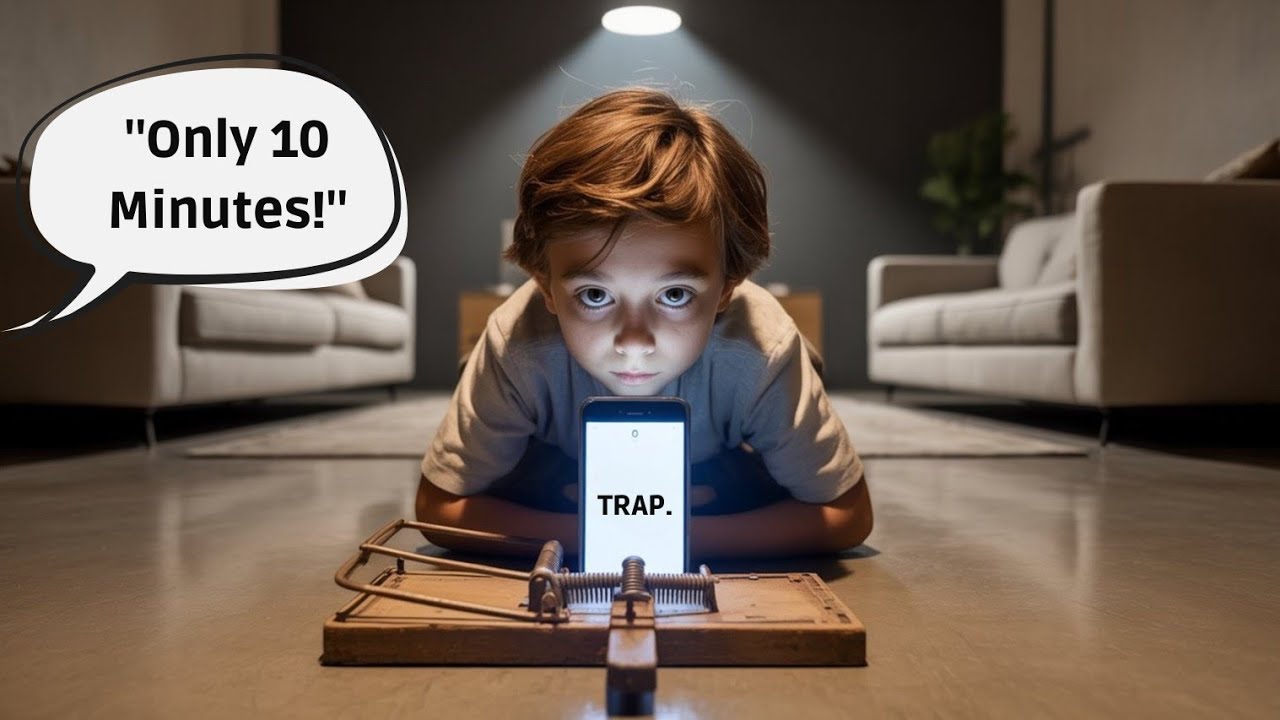
How can you motivate children? Many parents and teachers despair of this question again and again in everyday life. If you take a look at the relevant advice literature, you will rarely find scientifically proven tips. The video therefore presents 5 motivational tips that have proven to be very effective in studies:
1. reframing difficulties (for more frustration tolerance).
2. promotion of a growth mindset
3. praising the effort (instead of the person)
4. question-behavior effect
5. flexible goal setting
Of course, some of these tips are not only useful for motivating children (or students), but can also be used by us to motivate ourselves.
__________________
Studies and books (only a small selection:)
Autin, F., & Croizet, J. C. (2012). Improving working memory efficiency by reframing metacognitive interpretation of task difficulty. Journal of Experimental Psychology: General, 141(4), 610.
Burck, E. (2020). What to do when children don’t listen: How psychological research helps parents and teachers find the best education (Educational psychology, Classroom management, Educational psychology). Books on Demand.
Miles, L. M., Rodrigues, A. M., Sniehotta, F. F., & French, D. P. (2020). Asking questions changes health-related behavior: an updated systematic review and meta-analysis. Journal of clinical epidemiology, 123, 59-68.
Mueller, C. M., & Dweck, C. S. (1998). Praise for intelligence can undermine children’s motivation and performance. Journal of personality and social psychology, 75(1), 33.
Spangenberg, E. R., Kareklas, I., Devezer, B., & Sprott, D. E. (2016). A meta-analytic synthesis of the question-behavior effect. Journal of Consumer Psychology, 26(3), 441-458.
Wilding, S., Conner, M., Sandberg, T., Prestwich, A., Lawton, R., Wood, C., … & Sheeran, P. (2016). The question-behaviour effect: a theoretical and methodological review and meta-analysis. European Review of Social Psychology, 27(1), 196-230.